
In 2015, The Guardian was staring down a forecast loss of $100 million. Print advertising was collapsing across the newspaper industry, digital revenue hadn’t caught up, and the paper’s long-term survival was a genuine question rather than a rhetorical one. David Pemsel walked into that situation as the newly appointed CEO of Guardian Media Group, and by 2019, the paper had posted its first operating profit in 25 years. That single fact tends to anchor most conversations about him, but it’s really only the middle chapter of a career that runs from television marketing through newspaper economics and into fashion governance and digital assets.
| Quick Bio | |
|---|---|
| Full Name | David Pemsel |
| Known For | CEO of Guardian Media Group (2015–2022) |
| Nationality | British |
| Early Career | Shine Entertainment, ITV plc |
| Guardian Roles | Chief Commercial Officer, Deputy CEO, CEO |
| Later Ventures | Co-founder & CEO, ScienceMagic.Inc and ScienceMagic.Studios |
| Other Role | Chair, British Fashion Council (2022–2026) |
| Recognition | Media Leader of the Year, 2019 |
Who Is David Pemsel?
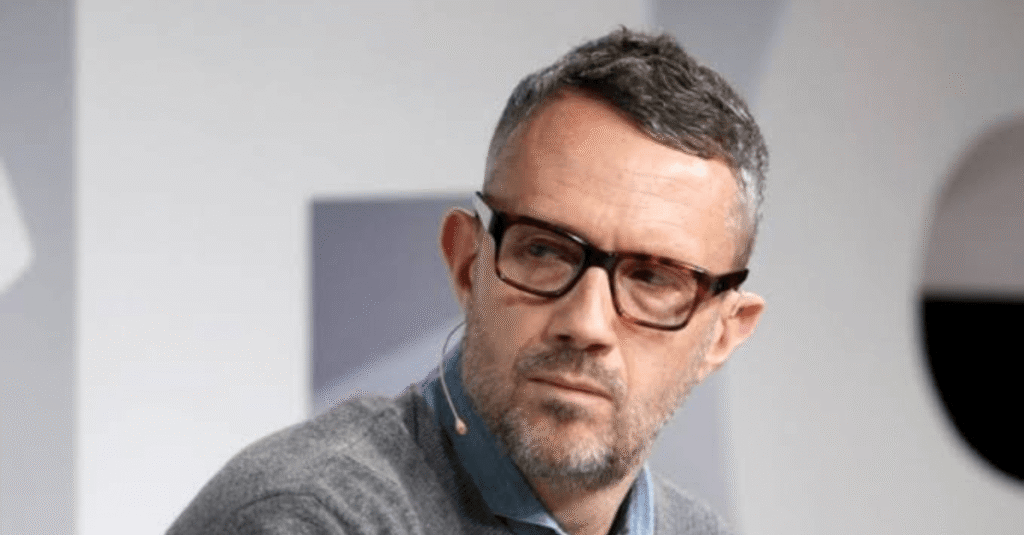
David Pemsel is a British media and business executive whose career has moved through three fairly distinct worlds: newspapers, marketing, and, more recently, fashion and digital assets. He’s best known for steering Guardian Media Group out of a period of sustained financial loss, but the path that got him there started well before he ever set foot in a newsroom. His early career was built in marketing and entertainment, and that commercial grounding is arguably what made him a useful fit for a publisher that needed more than editorial talent to survive.
What tends to get lost in shorter profiles is how gradual his rise at the Guardian actually was. He didn’t arrive as CEO. He joined the organization in a commercial capacity, built credibility over several years, and was promoted in stages before taking the top job. That slower climb matters, because it means the strategy he eventually put in place wasn’t an outsider’s quick fix — it was shaped by years of watching the business up close.

Early Career: Marketing, Not Journalism
Before any of his newspaper work, Pemsel spent his early career in marketing and entertainment. He co-founded Shine Entertainment in 2000, and by 2005 he had become Group Marketing Director at ITV plc, one of the UK’s largest commercial broadcasters. That role would have exposed him to advertising economics, audience data, and brand strategy at a scale most editorial-side newspaper executives never encounter.
It’s worth pausing on this, because it explains something important about his later decisions at the Guardian. Newspapers in the 2010s were run, for the most part, by people with journalism backgrounds trying to learn commercial strategy on the job. Pemsel came in the other direction — a commercial and marketing specialist who had to learn the editorial sensitivities of a newsroom, particularly one as protective of its independence as the Guardian.
Joining Guardian News & Media
Pemsel joined Guardian News & Media in 2011. Within a year, he’d been appointed Chief Commercial Officer, a role focused on advertising, partnerships, and revenue strategy. In 2013, his responsibilities expanded further when he was named Deputy CEO, a position that gave him oversight of commercial operations not just in the UK but across the US and Australia, with a mandate to integrate those regions into a single global operation.
This period is where he built the internal reputation that eventually led to the CEO role. Newspapers with international print and digital operations often struggle with fragmented commercial strategy — different markets pursuing different revenue models with little coordination. Pemsel’s job during these years was essentially to stitch that together, and by most accounts, he did it well enough to be trusted with the entire organization two years later.

Becoming CEO: The Turnaround Begins
David Pemsel was appointed CEO of Guardian Media Group in July 2015. The scale of what he inherited is easy to understate now, with the benefit of hindsight. Print advertising revenue across the entire newspaper industry was in structural decline, not a temporary dip. Digital advertising hadn’t matured into a reliable substitute. And the Guardian, unlike most of its rivals, had committed to keeping its journalism free to read online, which ruled out the paywall model that competitors like The Times had already adopted.
That last point is central to understanding his strategy. Rather than forcing readers behind a paywall, Pemsel’s team built a reader revenue model based on voluntary memberships and one-off contributions — essentially asking readers who valued the journalism to help fund it directly, without restricting access. It was a genuinely uncertain bet at the time. Plenty of media executives doubted that readers would pay for something they could get for free elsewhere.
He also had to operate within the constraints of the Scott Trust, the body that owns Guardian Media Group and exists specifically to protect the paper’s editorial independence. That meant commercial strategy always had to be negotiated alongside a newsroom that, reasonably, wasn’t going to let revenue pressure dictate coverage. Balancing those two things — keeping the business solvent while keeping editorial decisions untouched — was arguably the harder part of the job, even if it gets less attention than the eventual profit numbers.
The Strategy Behind the Numbers
Beyond the reader revenue model, Pemsel’s tenure involved a fairly disciplined approach to cost control paired with continued investment in the digital product itself. Rather than cutting spending uniformly, the approach was more selective — trimming where the business could afford to, while still funding the parts of digital publishing that were actually driving growth.
He was also Chairman of GMG Ventures, a $50 million fund set up to make early-stage investments in media technology companies. That side of the operation gave the Guardian a foothold in the wider media-tech ecosystem, beyond its own publishing business, and reflected a broader belief that the organization needed to understand where the industry was heading, not just react to where it currently stood.
The Result: Profit After 25 Years
By 2019, the Guardian recorded its first operating profit in 25 years. For a paper that had been losing money for a quarter of a century, and that had been forecasting a $100 million loss just four years earlier, this was a significant reversal. It’s also worth noting how unusual this was industry-wide. Most legacy newspapers during this period were shrinking, cutting staff, or being acquired. The Guardian’s return to profitability, without abandoning free access to its journalism, stood out as one of the more closely studied turnarounds in British media.
Life After the Guardian
Pemsel left Guardian Media Group in 2022. Rather than stepping into another traditional media role, he co-founded ScienceMagic.Inc alongside Daniel Marks and Julietta Dexter of The Communications Store, a public relations firm whose clients had included Versace, Victoria Beckham Beauty, and Goop. The new venture was pitched as a strategic and creative agency built around what Pemsel described as three themes: strategic science, creative magic, and digital experience.
From there, the business expanded into ScienceMagic.Studios, a joint venture with crypto research firm Delphi Digital and macro investor Raoul Pal, focused on helping brands and public figures build digital assets — think NFTs and social tokens — as a way of giving communities more direct ownership of the value they create. The studio raised $10 million in pre-seed funding in 2022, with backing from a mix of angel investors and venture firms including Coinbase Ventures and Brevan Howard Digital.
This pivot is easy to read as a departure from his newspaper career, but there’s a throughline if you look closely: both roles involved figuring out how an established or emerging community could be monetized without alienating it, whether that community was newspaper readers or brand audiences online.
Chair of the British Fashion Council
Pemsel’s connection to the British Fashion Council actually predates his exit from the Guardian. He joined its executive board in 2016 as a non-executive director, and in 2022 he succeeded Stephanie Phair as Chair, taking on responsibility for supporting the organization behind London Fashion Week and the Fashion Awards.
During his four years as Chair, the BFC recorded in-year revenue of £14 million in the 2024–25 financial year, a record for the organization, and raised £7.2 million through the BFC Foundation to support emerging designers. He also helped secure multi-year investment from the UK’s Department for Digital, Culture, Media and Sport, appointed Laura Weir as CEO, and signed off on the organization’s first four-year strategy, known as BFC 2030: Access, Creativity, Growth.
Pemsel announced he would step down as Chair on 30 September 2026, closing out ten years of involvement with the organization, four of them as Chair. A successor had not been publicly confirmed at the time of his announcement, with the BFC saying more details would follow.
What Ties His Career Together
Looking across the full arc — marketing at ITV, commercial leadership at the Guardian, a fashion-sector chairmanship, and a Web3-focused agency — the consistent thread is institutional change. In each case, Pemsel stepped into an organization that needed to rethink how it generated revenue or engaged its audience, without breaking the thing that made it valuable in the first place. At the BFC, he’s described his own role in similar terms, framing it as learning to support an executive team’s strategy rather than directing it himself.
Frequently Asked Questions
What is David Pemsel best known for? He’s most widely known for leading Guardian Media Group as CEO from 2015 to 2022, a period during which the Guardian moved from a forecast $100 million loss to its first operating profit in 25 years.
Did David Pemsel found the reader membership model at The Guardian? His leadership team built and scaled the reader revenue strategy — memberships and voluntary contributions — as an alternative to a paywall, which became central to the paper’s financial recovery.
What companies has David Pemsel founded? He co-founded ScienceMagic.Inc, a strategic and creative agency, and ScienceMagic.Studios, a digital asset venture built in partnership with Delphi Digital and investor Raoul Pal.
Is David Pemsel still Chair of the British Fashion Council? He remains Chair until 30 September 2026, after which he steps down, ending a decade of involvement with the organization.
What was David Pemsel’s role before joining The Guardian? Before Guardian News & Media, he worked in marketing and entertainment, including co-founding Shine Entertainment and serving as Group Marketing Director at ITV plc.
Has David Pemsel received any industry recognition? He was named Media Leader of the Year in 2019 and is a voting member of BAFTA, alongside his work as a regular speaker on leadership at London Business School.