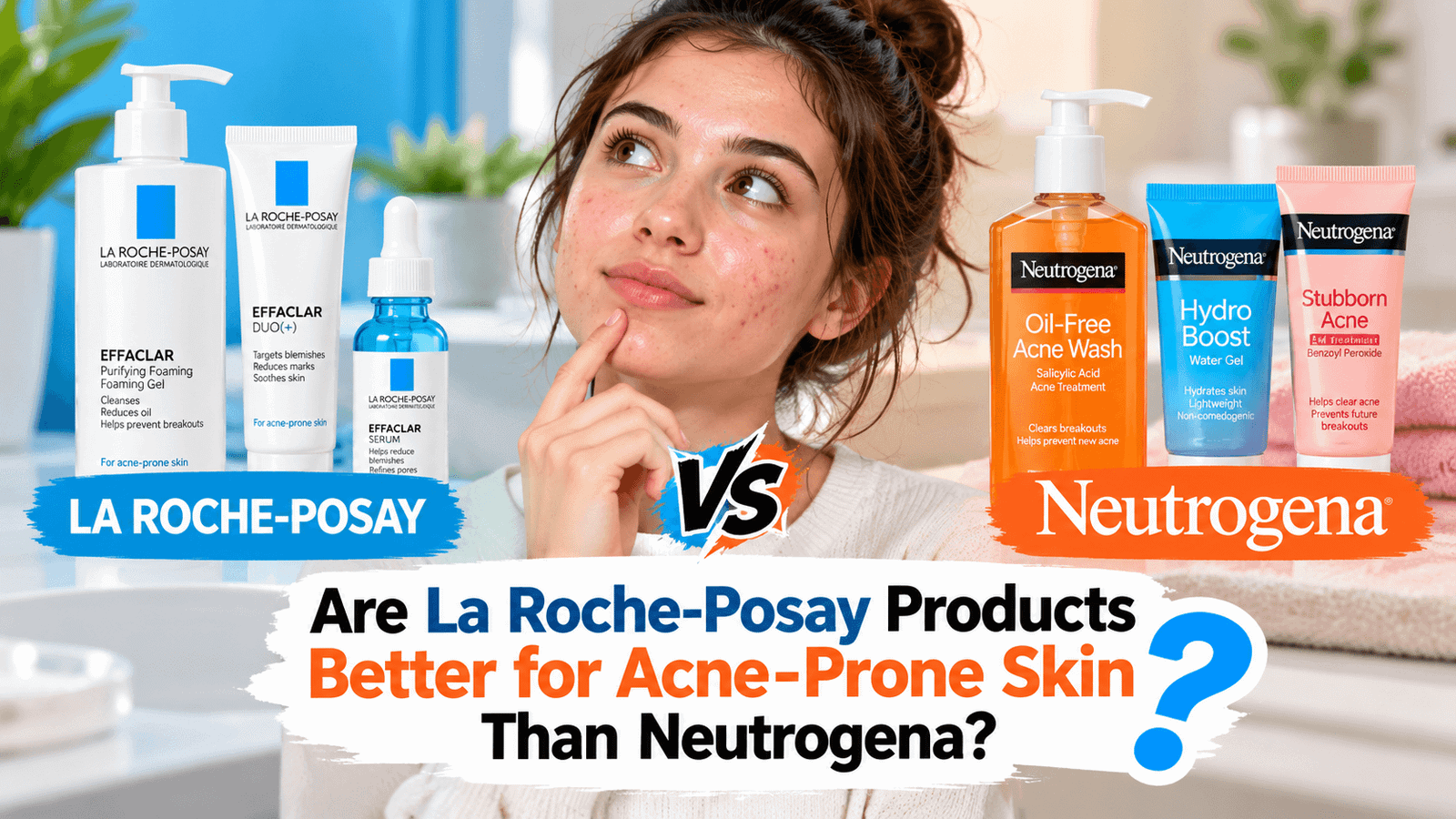
If you are dealing with breakouts between classes, exams, late nights, and a limited budget, choosing skincare can quickly become confusing. The question “I am a college student. Are La Roche-Posay products better for acne-prone skin than Neutrogena?” does not have a simple yes-or-no answer because both brands offer useful acne products, but their formulas, prices, strengths, and approaches can suit different skin types.
| Quick Comparison | La Roche-Posay | Neutrogena |
|---|---|---|
| Popular acne range | Effaclar | Multiple acne-care ranges |
| Common acne ingredients | Salicylic acid, benzoyl peroxide, adapalene | Salicylic acid, benzoyl peroxide, adapalene |
| Good for sensitive skin | Many options available | Depends on the individual formula |
| Budget friendliness | Usually more expensive | Often more affordable |
| Best approach | Gentle, targeted routine | Accessible, ingredient-focused routine |
| Overall choice | Depends on skin needs | Depends on skin needs |
I Am a College Student. Are La Roche-Posay Products Better for Acne-Prone Skin Than Neutrogena?
The most important point is that a brand name alone does not determine whether an acne product will work. Active ingredients, concentration, formulation, skin sensitivity, consistency, and the type of acne you have matter much more than simply choosing one company over another.
The American Academy of Dermatology recommends several topical options for acne, including benzoyl peroxide, retinoids, salicylic acid, and azelaic acid. Salicylic acid can help unclog pores, while benzoyl peroxide targets acne-causing bacteria and retinoids such as adapalene help prevent clogged pores.
This means both La Roche-Posay and Neutrogena can be reasonable choices. Instead of asking which brand wins overall, it is more useful to ask which specific product contains an ingredient suited to your particular breakouts.
Why College Students Often Struggle With Acne
College life can make maintaining a consistent skincare routine difficult. Irregular sleep, busy schedules, stress, sweating, makeup, and forgetting to wash your face after workouts can all complicate an already acne-prone complexion.
There is also the temptation to attack a breakout with several products at once. A student might use an acne cleanser, exfoliating toner, strong spot treatment, scrub, and another active ingredient because faster treatment sounds better.
In reality, irritating the skin can make your routine harder to tolerate. Dermatologists encourage gentle skincare because excessive irritation can contribute to additional problems and make sticking with acne treatment more difficult.
What Makes La Roche-Posay Attractive for Acne-Prone Skin?
La Roche-Posay’s Effaclar collection is specifically positioned toward oily and acne-prone skin. Depending on the product and market, the range includes ingredients such as salicylic acid, benzoyl peroxide, glycolic acid, niacinamide, and other ingredients designed around blemish-prone skin.
One notable option is Effaclar Adapalene Gel 0.1%. Adapalene is an over-the-counter topical retinoid that helps clear and prevent acne, particularly clogged pores, blackheads, and whiteheads. The product is also described as fragrance-free, oil-free, and non-comedogenic.
For students whose acne-prone skin also becomes easily irritated, the broader range of gentle-support products can make La Roche-Posay appealing. However, that does not mean every Effaclar product will automatically work for every sensitive or acne-prone face.
Where Neutrogena Has an Advantage
Neutrogena has been a familiar drugstore skincare name for years, and its biggest advantage for a college student may be accessibility. Its acne collection includes numerous products containing well-established ingredients such as salicylic acid and benzoyl peroxide.
For example, Neutrogena sells salicylic-acid cleansers and treatments designed for clogged or acne-prone skin. It also offers benzoyl-peroxide treatments, including a 2.5% Stubborn Acne AM Treatment and stronger targeted formulas.
That variety can be helpful when you want a straightforward acne treatment without building an expensive routine. The important part is selecting the appropriate strength rather than automatically reaching for the strongest product available.
La Roche-Posay vs Neutrogena for Sensitive Acne-Prone Skin
If your face becomes red, tight, flaky, or uncomfortable after using acne products, gentleness deserves as much attention as acne-fighting strength. A powerful treatment is not particularly useful if irritation becomes so uncomfortable that you stop using it.
La Roche-Posay may feel like the more attractive option for someone prioritizing a minimal routine alongside acne treatment. Several products are designed with acne-prone and sensitive skin considerations, although you still need to check the ingredients of each individual formula.
Neutrogena also has gentle options, but its acne catalog contains products across a wide range of strengths and formulations. Therefore, reading the active ingredient and concentration is more useful than assuming every product from either brand behaves the same way.
Which Is Better for Blackheads and Whiteheads?
For predominantly blackheads and whiteheads, ingredients that clear clogged pores become especially important. The American Academy of Dermatology notes that salicylic acid helps unclog pores and works particularly well for whiteheads and blackheads.
Adapalene is another important option. Dermatologists recommend retinoids for clogged pores, and over-the-counter adapalene can help with blackheads, whiteheads, and pimples while also helping prevent future clogged pores.
Since products containing relevant active ingredients exist within both brands, there is no automatic winner. Look at what your skin needs first and the logo on the bottle second.
Which Is Better for Red, Inflamed Pimples?
Benzoyl peroxide becomes especially relevant when dealing with inflammatory acne. Dermatology guidelines strongly recommend topical benzoyl peroxide, which works by reducing acne-causing bacteria and can be combined with treatments that address other causes of acne.
Both brands have benzoyl-peroxide options. Neutrogena, for example, offers acne treatments ranging from 2.5% benzoyl peroxide to stronger formulas, while La Roche-Posay also includes benzoyl-peroxide products within its acne-focused offerings.
Stronger does not necessarily mean better, particularly when starting treatment. The American Academy of Dermatology suggests starting with 2.5% benzoyl peroxide to help reduce problems such as dryness, irritation, and burning.
The College Budget Question
This is where Neutrogena can become particularly appealing. College students often need to balance skincare against textbooks, food, transportation, rent, tuition, and everyday expenses, so an elaborate routine may simply be unrealistic.
You also do not need six or seven products to build a sensible acne routine. A gentle cleanser, an appropriate acne treatment, a non-comedogenic moisturizer, and daytime sunscreen can provide a much simpler starting structure.
Spending more money does not guarantee clearer skin. A reasonably priced product containing an appropriate active ingredient can be more useful than an expensive formula that does not address your particular type of acne.
A Simple Morning Routine for a Busy Student
Start by washing your face gently rather than aggressively scrubbing it. If you use an acne treatment in the morning, follow its directions carefully and avoid applying extra amounts because you want the breakout gone before tomorrow’s lecture.
Follow treatment with a lightweight moisturizer if your skin needs it. Moisturizing is especially useful when acne treatments such as benzoyl peroxide, salicylic acid, or adapalene leave your skin dry or irritated.
Finish with a broad-spectrum, non-comedogenic sunscreen of SPF 30 or higher. Sun protection is particularly important when your skincare routine includes ingredients that can make your skin more sensitive or when you have lingering post-acne marks.
A Simple Night Routine
Your nighttime routine can remain equally straightforward. Cleanse gently to remove sunscreen, makeup, oil, sweat, and daily buildup without repeatedly washing or scrubbing your face.
Then use the acne treatment appropriate for your routine. If you are starting adapalene, for example, introduce it carefully according to product instructions and allow your skin time to adjust rather than adding several new exfoliating products simultaneously.
Finish with a non-comedogenic moisturizer when needed. Keeping the routine simple also makes it easier to identify which product is helping and which one may be causing irritation.
Don’t Switch Products Every Week
One of the hardest parts of acne care is waiting. When a new product does not produce perfect skin after five days, it is tempting to throw it away and buy whatever skincare product is currently trending online.
Dermatologists recommend giving an appropriate over-the-counter acne treatment roughly six to eight weeks to show improvement, provided you are using it correctly and not experiencing a reaction that requires stopping it.
Constantly changing treatments can make it difficult to determine what actually works. Consistency is usually more useful than having a bathroom shelf filled with partially used products.
So, Is La Roche-Posay Actually Better Than Neutrogena?
For a college student with sensitive, acne-prone skin who is comfortable paying more, La Roche-Posay can be an attractive choice. Its Effaclar collection provides several targeted acne options while the wider brand offers products designed with sensitive skin in mind.
For a student prioritizing affordability and easy access to established acne ingredients, Neutrogena can be an equally reasonable starting point. Its range provides salicylic acid, benzoyl peroxide, and other targeted options without requiring an elaborate skincare routine.
Therefore, the answer to “I am a college student. Are La Roche-Posay products better for acne-prone skin than Neutrogena?” is not necessarily. The better product is the one with an appropriate active ingredient, tolerable formulation, sensible price, and routine you can consistently follow.
Frequently Asked Questions
Is La Roche-Posay good for acne-prone skin?
Yes, the brand has an Effaclar range developed specifically around oily and blemish-prone skin. Certain products contain established acne ingredients such as salicylic acid, benzoyl peroxide, or adapalene, depending on the specific formula and country.
Is Neutrogena good for college students with acne?
It can be a practical option because the company offers many acne products using ingredients such as salicylic acid and benzoyl peroxide. Choosing the right formula for your skin is more important than choosing the brand alone.
Can I combine La Roche-Posay and Neutrogena products?
There is generally no rule requiring every skincare step to come from one brand. What matters is whether the ingredients in the products work together without creating unnecessary irritation.
How long should I try an acne product?
Many acne treatments require patience. Dermatologists recommend allowing approximately six to eight weeks for an appropriate treatment to produce noticeable improvement before judging the result, unless you develop significant irritation or another concerning reaction.
When should I see a dermatologist?
Seek professional help if you have deep, painful nodules or cysts, significant scarring, persistent acne that does not improve with appropriate over-the-counter treatment, or if you are unsure which treatment is safe for you. Deep acne often requires dermatologist-directed treatment.
Final Thoughts
For most college students, choosing between La Roche-Posay and Neutrogena should not become a battle between two brand names. La Roche-Posay may appeal more to someone wanting a carefully targeted routine with options suited to sensitive acne-prone skin, while Neutrogena can provide accessible and often budget-conscious acne treatments.
Start with your type of acne, choose a proven active ingredient, keep the rest of your routine gentle, moisturize when needed, and protect your skin from the sun. If your acne is painful, deep, scarring, or stubborn despite consistent treatment, professional dermatology care is a much better next step than continuously buying new products.